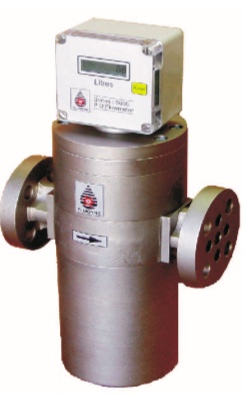
Fuel Consumption Flow meter

Accurate monitoring of fuel consumption is a critical requirement in industries such as automotive, power generation, marine, construction, agriculture, and transportation.

Fuel costs represent a significant portion of operational expenses, and uncontrolled consumption often leads to inefficiencies and hidden losses. To address this, fuel consumption flow meter are deployed to measure, record, and analyze the precise quantity of fuel consumed by engines, vehicles, or industrial equipment.

Fluidyne provides tailor-made products for both direct and differential measurement. These offerings eliminate error caused by temperature, density and pressure variations ensuring reliable performance across varying engine loads.
Core Information

Applications

Engine testing and test beds
  • Load vs consumption profile measurement

Data Centers

  • Fuel consumption flowmeter for DG

Railway Powercars

  • Measurement of backup DG consumption

Boilers, Furnaces

  • Burner measurement
  • LSHS flowmeter

Marine and Naval

  • Propulsion engines

Related Products

Series 66X0

Series 66X0

Differential Fuel Meter for Cummins Engine

FAQ’s

A fuel consumption flow meter is a precision instrument used to measure and monitor the exact amount of fuel consumed by an engine, generator, vehicle, or industrial system. It works by tracking the flow of fuel through the supply, and in return-line systems, calculating net consumption. These meters provide accurate, real-time data for efficiency analysis, cost control, and integration with fuel, MES, or SCADA management systems.

Fluidyne meter can measure all type of liquid fuels such as –

  1. High speed diesel
  2. Gasoline
  3. Blended fuels
  4. Furnace Oil
  5. LSHS fuels
  6. Ethanol and solvent fuels
  7. Hydrogenated vegetable oils

The meter is available as standard in 316L Stainless Steel material which enables use over a wide range of fuels.

Fluidyne flowmeters are designed to measure fuel accurately in both supply and return lines. For simple engines, a single-line meter on the supply side ensures reliable monitoring. In modern diesel systems with return flow, Fluidyne offers dual-line or compact differential flowmeters that calculate true consumption with high accuracy. Equipped with patented oscillating piston technology, these meters provide dependable data for fuel management, efficiency analysis, and integration with digital systems.
Yes, Fluidyne fuel consumption flow meters can be seamlessly integrated with fleet and fuel management systems. Equipped with digital interfaces such as RS-485/ Modbus, 4-20 mA and HART they enable real-time data transfer for monitoring fuel usage across vehicles or equipment. This integration allows operators to track consumption, prevent pilferage, optimize routes, and analyze performance, ensuring complete transparency and cost control in fleet operations and industrial fuel management.

Step 1 – Prepare the System

  • Switch off the engine/equipment and depressurize the fuel line
  • Ensure fuel lines are clean and free of debris

Step 2 – Mount the Flow Meter

  • Install the meter with fasteners. Appropriate mounting holes are provided on the meter frame
  • Follow the flow direction arrow marked on the meter body
  • Use proper fittings and ensure a rigid, vibration-free mount
  • Install a fine filter of 50 micron or lower upstream of the flowmeter
  1. Seal Connections
    • Connect the flowmeter inlet, outlet and return joints via flexible hoses
    • Hoses are preferred to pipes because engine vibration may eventually loosen joints
    • Tighten joints securely to avoid leakage and air locks
    • Use compatible sealing materials suitable for the fuel type
  2. Connect Electronics
    • Provide power supply and output cables to the transmitter
  3. Purge Air
    • Open the fuel line and allow fuel to flow slowly to expel trapped air
    • Ensure steady, bubble-free flow through the meter
  4. Finalize Installation
    • Secure all wiring and hoses
    • Start the engine/equipment and check for stable, accurate readings