Master Flow Meter for Precision Flow Meter Calibration & Proving
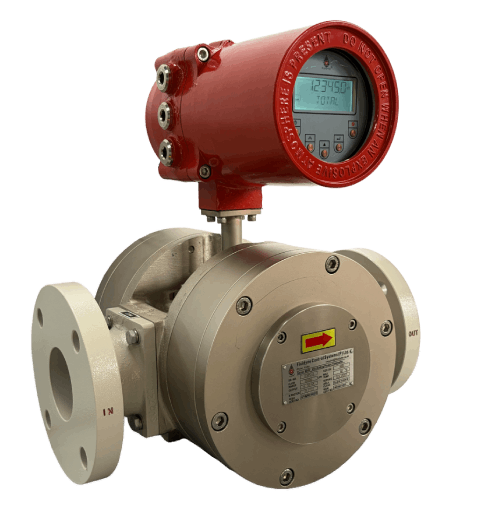
Fluidyne master flow meters use the patented and time-tested oscillating piston positive displacement technology to provide a high-accuracy reference for flow meter calibration, verification and master meter proving. With excellent repeatability of better than ±0.02%, each master meter ensures reliable volumetric measurement and provides an accurate and practical solution for laboratory and on-site master meter calibration.
Core Information
A master flow meter is a high-precision reference flowmeter characterized by exceptionally high repeatability, typically better than ±0.015%. Positive Displacement (PD) technology is particularly suited for master meter applications because it directly measures volumetric flow by repeatedly trapping and displacing precisely defined volumes of liquid within its measuring chamber.
Unlike Coriolis and turbine type flowmeters which are velocity-based, Positive Displacement meters do not require extensive flow conditioning, long straight pipe runs or a fully developed laminar flow profile, making them highly suitable for both laboratory and field flow meter calibration.
High repeatability is the foundation of master meter accuracy. Through multi-point calibration and linearization, a highly repeatable meter can achieve measurement accuracy of up to ±0.05%. Instead of applying a single K-factor across the entire operating range, Fluidyne master flow meters can be configured with up to 20 calibration factors. Fluidyne’s proprietary linearization algorithm enables the flow computer to determine the appropriate K-factor for the actual operating flow rate.
This combination of mechanical repeatability and digital linearization enables highly accurate and consistent master meter calibration and master meter proving across a wide operating range.
A Fluidyne Positive Displacement master meter consists of two critical elements
Applications
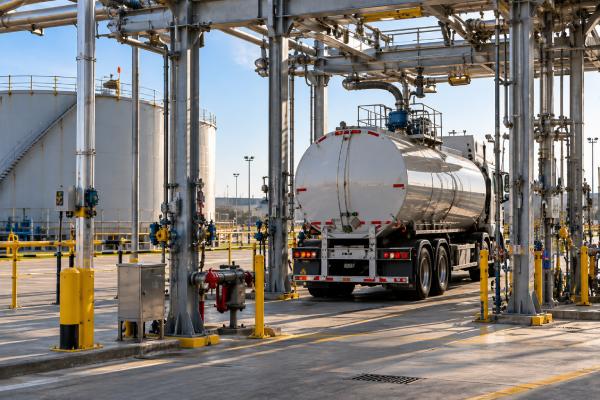
Oil and Gas

Aviation

Bunkering